


Fusion in Limbus Company’s Mirror Dungeon can either sharpen your entire run or quietly waste your best resources. The difference comes down to understanding how the system actually works before you start combining things.
This guide covers what E.G.O Gifts are, where they come from, how fusion works, when to fuse, and how to build around a keyword theme so your gifts actually support each other instead of pulling in different directions.
What E.G.O Gifts Are and Why They Matter in Mirror Dungeon
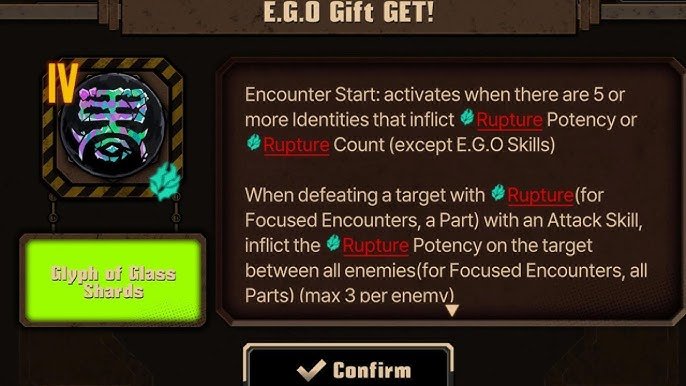
E.G.O Gifts are passive buffs that only apply during Mirror Dungeon runs. They do not carry over to standard combat, so they exist entirely within the context of a single run.
You pick them up from encounter rewards, boss drops, shops, and rest nodes as you move through a run. Gifts come in tiers — roughly Tier I through Tier V — with higher tiers offering stronger or more layered effects. Getting access to those higher-tier gifts is partly tied to your Starlight upgrades, which improve your drop pool over time as you progress through Mirror Dungeon content.
This means your fusion options in a fresh account run will look different from what an experienced player sees. As your Starlight level increases, better gifts start appearing more consistently, which makes fusion more rewarding over time.
The Two Types of Fusion — Recipe vs. Random Pool
This is the part that trips up most players. Fusion is not a single system with one behavior — there are two distinct types, and they work very differently.
Recipe Fusion
Recipe Fusions take specific required gifts and always produce the same fixed result. There is no randomness involved. If you combine the right ingredients in a recipe fusion, you will get the same gift every time. This is the reliable, targeted approach.
A concrete example: some guides describe obtaining specific high-value gifts by combining precise prerequisite gifts in a set combination. The outcome is guaranteed if you have the right materials. Think of it as crafting — the recipe exists, and following it gives you a predictable result.
Non-Recipe Fusion
Non-recipe fusions draw from a pool based on tier and keyword. The results are less predictable. You might have a rough idea of what could come out, but you are not guaranteed any specific gift. Think of this type more like gambling with weighted odds rather than crafting with a known output.
The critical thing to know: ingredients are consumed either way. Whether your fusion is a recipe or a random draw, the gifts you put in are gone. So knowing which type of fusion you are doing before you commit is not optional — it is the decision itself.
Do not assume all fusion outcomes are guaranteed. Only recipe fusions are. If you cannot confirm you are following a recipe, treat the result as uncertain.
How to Fuse E.G.O Gifts — The Step-by-Step Process
Fusion typically happens at rest nodes, which appear regularly throughout a run — often before boss nodes or at specific floor intervals. These nodes are also where you can heal or visit shops, so every stop involves a real tradeoff.
When you fuse, you select a primary gift — the one you want to upgrade or transform — and then choose compatible fodder gifts to combine with it. In non-recipe fusions, gifts that share a keyword with your primary gift are generally safer pairings. Affinity between gifts can influence what comes out of the pool.
Once the fusion happens, the used gifts are gone. Only the result remains. There is no undo.
Budget your rest node decisions carefully. Healing keeps your team alive through harder nodes. Shops can offer useful gifts directly. Fusion can push your build toward something stronger, but only if you have the right materials ready. All three compete for the same stops, and spending a rest node poorly early in a run can limit what you can do later.
How to Target Specific Gifts With the Process-of-Elimination Method
If you want a specific high-tier gift rather than just any upgrade, there is a practical method worth knowing about. It works best when a keyword only has two accessible Tier IV outcomes.
Here is how it works:
- Fuse intentionally for one of the two possible Tier IV outcomes.
- Once you have that result, use it as fusion material in the next fusion.
- With only one remaining option in the pool, the next fusion is effectively forced toward the gift you actually want.
This works because the fusion pool narrows based on what has already been produced or consumed. When one outcome is removed from consideration, the other becomes the only possible result.
The catch is that this approach requires patience. You need to hold your gifts long enough to execute both fusions rather than burning your materials early. It is most useful late in a run when you have accumulated enough gifts to afford the two-step process without leaving yourself short on fodder.
This is not a guaranteed mechanic that works in every scenario — it depends on the specific keyword pool you are working with and what gifts you have available. But when the conditions are right, it is one of the most reliable ways to force a specific outcome from a non-recipe fusion.
Build Around a Keyword, Not Around Individual Gifts
One of the most common mistakes in Mirror Dungeon is picking up strong-looking gifts without thinking about how they interact. A Tier III gift that reinforces your team’s Bleed synergy is usually more valuable than a Tier IV gift that does something unrelated to your build.
Keywords like Burn, Bleed, Poise, and Rupture appear across gifts, sinners, and E.G.O skills. When your gifts share a keyword with your team’s main damage type, the effects stack and reinforce each other. When they do not, you end up with gifts that are individually decent but do not push the run forward.
A practical example: if you are running a Bleed-focused team, prioritize gifts with Bleed-related keywords at every drop and shop opportunity. Then fuse toward higher-tier Bleed synergies rather than taking generic damage buffs. The run becomes more consistent because every gift is pulling in the same direction.
This keyword focus also makes fusion decisions easier. When you know what you are building toward, you know which gifts are fodder and which are worth preserving. Without a keyword plan, every fusion feels like a guess.
For players who want to explore builds, track strategies, and stay informed about game systems like this one, resources like Onbizjournal can help with broader gaming and strategy content.
When to Fuse and When to Wait
Early in a run, your priority should be survival and gift collection. Fusing weak Tier I or Tier II gifts into something only slightly better is rarely worth the cost when those gifts could have been saved as fodder for a more valuable combination later.
Mid-run is when you should have a clearer picture of your keyword theme. If recipe fusion materials are available and you can confirm the output, this is a good time to execute. Hold off on random pool fusions unless you have spare gifts you would not miss.
Late in a run — especially after several floors and before major boss nodes — is when the process-of-elimination method and high-tier recipe fusions are most worth pursuing. You have more gifts, you know your build direction, and the payoff from a strong Tier IV or Tier V gift is felt most in the hardest fights.
One last practical note: Mirror Dungeon and E.G.O Gift systems receive seasonal updates. Specific gift recipes, tier pools, and drop conditions can change with patches. The core mechanics described here are stable, but always check current community resources or patch notes for the latest recipe combinations and gift availability.
Final Thoughts
E.G.O Gift fusion is most powerful when it is intentional. Know whether you are doing a recipe or random fusion before you commit. Build around a keyword from the start. Save your best fodder for late-run combinations, and use the process-of-elimination approach when you are close to a specific high-tier gift you need.
The players who get the most out of fusion are not the ones who fuse everything they find — they are the ones who know what they are building toward and when to hold back.
Read Also:

